 Outbound CRE
Structured for buyer research
PropertyMarketBusiness planBuyer fit

Finding the right buyer is not one database search or one email blast. It is a coordinated operating system: structure the listing, define who can plausibly buy it, prioritize the strongest fits, reach them across the right channels, and route credible interest back to the broker.
Turn the offering memorandum into a structured property and market brief. Use that brief to define likely buyer profiles, build a broad buyer universe, rank prospects by fit and observable signals, coordinate listing-specific outreach, and qualify replies before the broker takes over the conversation.
A marketplace can capture active demand, and a database can provide names, but neither replaces the work of deciding who fits this asset, why the opportunity may matter to them, and what should happen when they respond. NAR's commercial directory separates listing platforms, property data, broker lists, CRM, research, and marketing services into distinct categories.
This is not a simple funnel. Research, prioritization, outreach, and reply handling keep informing one another around the active listing.
Turn the OM into a consistent property and market brief that can guide research, messaging, and qualification.
Describe the mandates, portfolios, geographies, and strategies that create a plausible reason to buy.
Research known relationships and net-new companies, decision-makers, transaction patterns, and market activity.
Rank prospects by property fit, portfolio logic, timing signals, contact confidence, and message relevance.
Run one listing-specific motion across the channels that fit the campaign, with shared context and follow-through.
Route relevant replies, buyer context, and concrete next steps to the broker's inbox.
One shared source of context
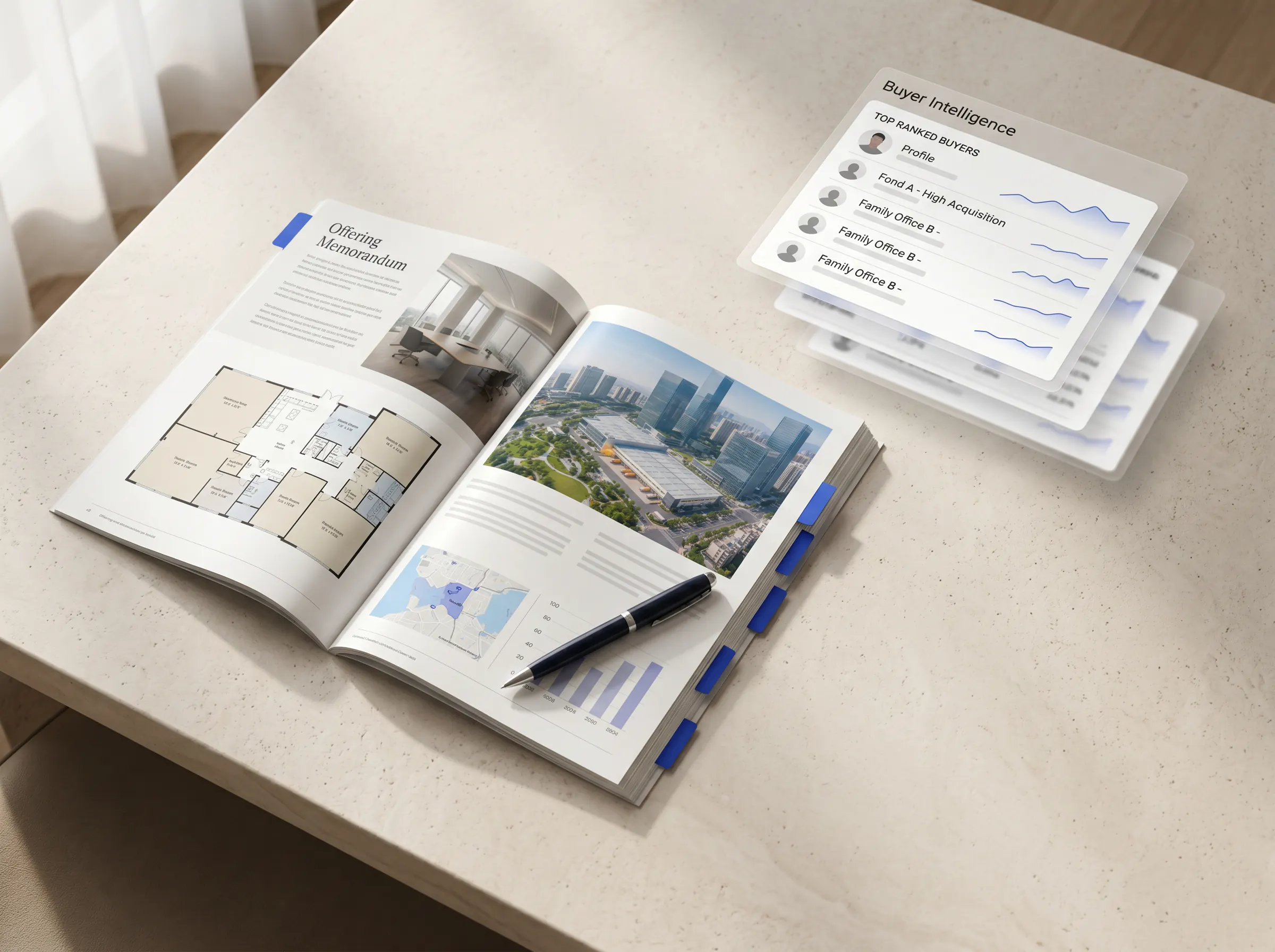
Extract the information that should shape the search: asset type, location, price guidance, size, occupancy, tenancy, income profile, business plan, risk factors, and the investment thesis already presented to the market.
The goal is not to rewrite the OM. It is to make its key attributes usable across research, prioritization, messaging, and reply qualification. CCIM's education links market analysis with the choice of marketing strategy.
A consistent property-and-market brief that every buyer decision can be checked against.
Build buyer profiles before collecting contacts. A useful profile describes the investors or operators whose mandate, portfolio, geography, and strategy align with the listing.
Published acquisition criteria often make these filters explicit. One active industrial buyer organizes its criteria by asset type, geography, deal size, physical profile, and deal type. The exact filters change by listing; the principle does not.
Several testable buyer profiles tied to this asset—not a generic label such as “institutional investors.”
Start with known relationships, then widen the search. Relevant buyers may appear in ownership records, comparable transactions, nearby portfolios, active acquisition mandates, broker networks, listing-platform engagement, and company or decision-maker research.
Record the company, relevant contact, role, fit rationale, source, and any signal that may affect timing. The result is a working research set with traceable reasons for inclusion—a buyer universe, not a guarantee of interest.
Illustrative lead-list structure. Names and companies are fictional examples.
Not every plausible buyer deserves the same sequence or urgency. Prioritize prospects using evidence that connects the listing to the buyer's demonstrated behavior.
A CCIM transaction case highlights targeted outreach and a deep understanding of buyer profiles; the eventual buyer had existing regional holdings that created a practical acquisition rationale. That is an example of the method, not a promised result.
Asset, geography, size, risk profile, and strategy
Nearby holdings, operating overlap, or a visible gap
Recent activity, stated mandate, fundraising, expansion, or dispositions
The right person and a credible route to reach them
A specific reason the opportunity may matter to that buyer
A prioritized lead list with company, contact, role, fit signal, and recommended next action.
Email, phone, social outreach, direct mail, video, and other channels can play different roles, but the message should stay grounded in the same listing thesis and buyer-specific rationale.
A reply is useful when it creates a concrete next step. Qualified does not mean guaranteed to transact. It means the response has enough relevance or intent for broker review. The broker remains responsible for relationship judgment, disclosures, deal strategy, negotiation, and transaction execution.

Re: Property information
Interested in reviewing the listing materials and discussing next steps.
Buyer profile, outreach history, question, and recommended broker action.
Use this before launch to keep listing facts, buyer logic, campaign approvals, and broker handoff aligned.
More names do not solve unclear fit. Define the property and buyer thesis first.
Rank prospects using asset, geography, mandate, portfolio, timing, and contact evidence.
One listing needs one coordinated motion with consistent context and tracked follow-up.
Route responses based on relevance, intent, and a concrete next step—not activity alone.
Listing platforms can capture buyers already searching in that venue. Targeted buyer research and direct outreach address a different job: identifying plausible buyers, explaining why the opportunity fits, and creating a managed path from contact to broker conversation. Many campaigns benefit from both.
Start with listing attributes and buyer profiles, then research companies and decision-makers across transaction history, ownership, portfolios, acquisition criteria, broker relationships, platforms, and market activity. Keep the reason each buyer belongs on the list.
A likely buyer shows observable alignment with the property: relevant asset history, geography, deal size, strategy, portfolio logic, timing signals, and an identifiable acquisitions contact. These signals improve prioritization; they do not prove intent.
Capture the response, evaluate whether it is relevant and actionable, add context from the buyer profile and outreach history, and route it to the broker when there is credible interest, a material question, or a clear next step.
The offering memorandum or the listing materials already in use. Outbound CRE structures the listing, maps and prioritizes likely buyers, coordinates multichannel outreach, and routes qualified replies to the broker's inbox.